
You finally got that new ultrawide monitor, but it’s hogging your entire desk. The base is bulky, the screen sits too low, and you’re constantly craning your neck. A monitor arm solves all that by lifting your display to eye level and reclaiming valuable workspace. In this guide, we’ve rounded up the best monitor arm options for 2026, from budget-friendly single arms to heavy-duty models that support massive screens. Whether you’re a gamer, a programmer, or just someone who wants a cleaner desk, we’ve got you covered.
We’ve spent hours comparing specs, reading user feedback, and evaluating build quality to bring you a curated list of top performers. If you’re also looking to upgrade your overall workspace, check out our guide to the best standing desks for a healthier setup.




Buying Guide: What to Look for in a Monitor Arm
Choosing the right monitor arm isn’t just about picking the cheapest option. You need to consider your monitor’s size, weight, and VESA pattern, as well as your desk setup. Here are the key factors we evaluated for each product in our list.
Weight Capacity and Screen Size
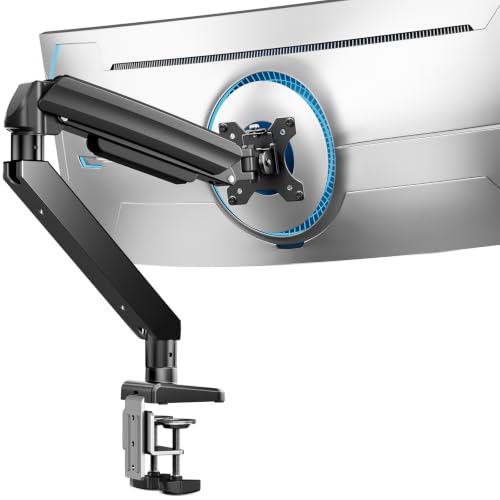
First, check your monitor’s weight and size. Most arms support screens between 13 and 34 inches, but heavy-duty models can handle up to 49 inches and 44 pounds. If you have a massive ultrawide, look for arms with a higher weight rating and a reinforced base, like the HUANUO TitanLift Heavy Duty Monitor Arm or the ErGear Heavy Duty Monitor Arm.
For standard monitors, a lighter arm with a 20-pound capacity will do the job. Always verify your monitor’s VESA pattern (75x75mm or 100x100mm) to ensure compatibility.
Desk Compatibility and Mounting Options
Most monitor arms come with both C-clamp and grommet mounting options. The C-clamp attaches to the edge of your desk, while the grommet mount fits through a hole in the desk surface. Check your desk’s thickness and material. Wood desks are ideal, but glass or plastic surfaces may not be suitable. Also, make sure there are no crossbeams underneath that could interfere with installation.
If you have a standing desk, a monitor arm is a must to keep your screen at the right height. Pair it with our favorite standing desk converters for maximum flexibility.
Articulation and Ergonomics
Look for an arm that offers smooth adjustment: tilt, swivel, rotation, and height adjustment. The more articulation, the easier it is to position your screen for optimal comfort. Some arms, like the HUANUO FlowLift™ Pro, feature a mechanical spring system that provides smooth, stable movement without the sagging issues of gas springs.
An ergonomic setup can reduce neck and back strain, especially if you spend long hours at your desk. Pair your monitor arm with a high-quality ergonomic office chair to complete your workstation.
Cable Management and Build Quality
A good monitor arm should include cable management to keep your cords organized. Look for arms with built-in channels or clips. Build quality matters too: aluminum or steel construction ensures durability. Many arms are rated for 20,000+ adjustment cycles, so they’ll last for years.
For a multi-monitor setup, consider a dual arm like the HUANUO FlowLift™ Dual Monitor Stand. It keeps your screens aligned and frees up even more desk space. If you’re planning a full office makeover, our L-shaped standing desk guide can help you find the perfect desk.
Final Thoughts
Whether you’re looking to declutter your desk or improve your posture, there’s a monitor arm on our list that fits your needs. For a budget-friendly option that handles most screens with ease, go with the NB SmooVex™ Monitor Arm. If you have a heavy ultrawide monitor and need rock-solid support, the HUANUO TitanLift Heavy Duty Monitor Arm is your best bet. Both offer excellent value and will transform your workspace.
Frequently Asked Questions
Will a monitor arm work with any monitor?
Most monitor arms support VESA 75x75mm or 100x100mm mounting patterns, which covers the majority of monitors. However, you need to check your monitor’s weight and screen size to ensure it falls within the arm’s capacity. If your monitor doesn’t have VESA holes, you may need an adapter plate.
Can I install a monitor arm on a glass desk?
We don’t recommend it. Glass desks can crack under the pressure of a C-clamp. Most manufacturers advise using monitor arms only on wooden desks. If you have a glass desk, consider a freestanding monitor stand instead.
How do I adjust the tension on my monitor arm?
Most monitor arms have a tension adjustment screw, usually located near the base or the VESA plate. You’ll need to adjust it to match your monitor’s weight. Some models, like the HUANUO FlowLift™ Pro, have a visible indicator to help you set the perfect tension. If you’re unsure, refer to the manufacturer’s instructions.
Are monitor arms worth it in 2026?
Absolutely. A monitor arm not only frees up desk space but also improves ergonomics by allowing you to position your screen at eye level. This reduces neck and back strain, especially if you work long hours. With prices ranging from budget-friendly to premium, there’s an option for every workspace.